
Emotional Intelligence in Leadership: Why It's a Business Priority
In "Emotional Intelligence in Leadership: Why It’s a Business Priority," Dr. Charles explores the definitive shift of emotional intelligence (EI) from a peripheral "soft skill" to a core strategic imperative for modern organizations. Dr. Charles provides organizations with the necessary infrastructure to move beyond one-off training and cultivate a culture where emotional intelligence is a sustainable, performance-enhancing asset.

What 'Best Keynote Speaker' Really Means for Your Event
In "What 'Best Keynote Speaker' Really Means for Your Event," Dr. Charles argues that the quest for the "best" speaker is fundamentally flawed if it relies on subjective rankings rather than objective fit. Ultimately, Dr. Charles provides a roadmap for transforming the high-stakes task of speaker selection into a strategic choice that ensures an event delivers targeted, lasting value.

A Leadership Keynote Speaker for Audit and Accounting Audiences
In "A Leadership Keynote Speaker for Audit and Accounting Audiences," Dr. Charles identifies a critical gap in professional development: the tendency for organizations to rely on generic leadership speakers who fail to understand the nuanced career trajectory of audit and accounting professionals. By focusing on her signature topic, "Transforming Internal Audit into Strategic Value," Dr. Charles provides a roadmap for navigating the digital age, big data, and regulatory uncertainty, ultimately fostering leadership that is as technically sound as it is strategically impactful.

Why Representation Matters When Booking Women Keynote Speakers
In "Why Representation Matters When Booking Women Keynote Speakers," Dr. Charles explores the dual imperative of representation: it acts as a powerful signal of organizational values while providing critical, diverse vantage points that elevate the quality of leadership discourse. By prioritizing speakers whose expertise is matched by their diverse perspectives, organizations can ensure their events drive broader thinking, better decision-making, and a more inclusive corporate culture.

Hiring a Leadership Keynote Speaker: A Practical Guide
In "Hiring a Leadership Keynote Speaker: A Practical Guide," Dr. Charles demystifies the speaker-selection process by transforming a high-stakes, often subjective decision into a structured, objective methodology. By bridging the gap between planning, customization, and logistical execution, this article provides a repeatable framework to ensure that a keynote serves as an effective, actionable catalyst for professional growth.

What 'Global Leadership' Means for Today's Speakers and Audiences
In "What 'Global Leadership' Means for Today's Speakers and Audiences," Dr. Charles argues that "global leadership" has evolved from a marketing buzzword into a critical operational reality for modern organizations. By focusing on key indicators, organizations can secure speakers who deliver content that resonates across borders and cultural contexts.
Booking an Emotional Intelligence Speaker: Keynote, Workshop, or Retreat?
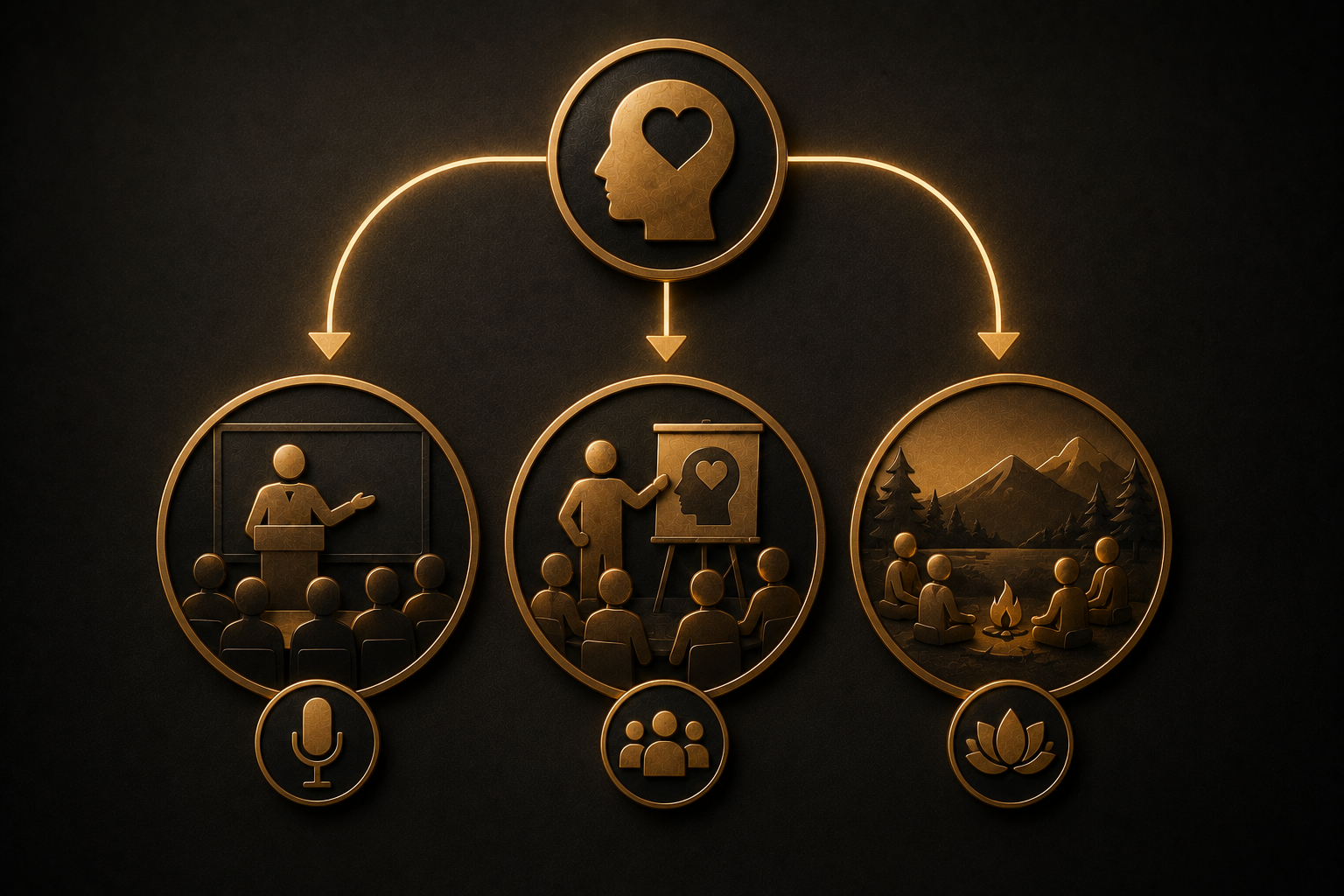
In "Booking an Emotional Intelligence Speaker: Keynote, Workshop, or Retreat?", Dr. Charles provides a tactical guide for aligning event formats with organizational learning objectives. By showcasing Dr. Sabine Charles’s flexible service model, the article demonstrates how organizations can build a customized learning journey that moves professionals from initial awareness to sustained behavioral mastery.

Leadership Strategies That Actually Change Team Performance
In "Leadership Strategies That Actually Change Team Performance," Dr. Charles addresses the gap between abstract leadership theory and the actionable strategies required to drive measurable outcomes. Through her integrated ecosystem of workshops and "Leadership MEQ" programs, Dr. Charles provides the necessary environment to move these strategies from conceptual understanding to daily practice.

The 5 Components of Emotional Intelligence and Why Leaders Need Them
In "The 5 Components of Emotional Intelligence and Why Leaders Need Them," Dr. Charles outlines the definitive psychological framework for emotional intelligence (EI), demystifying it from an innate personality trait into a masterable set of five core competencies. By highlighting how Dr. Sabine Charles embeds these five pillars into her "Leadership MEQ" framework and "Corporate Leadership Workshops," the article provides a practical blueprint for organizations to move beyond theory and foster a culture of sustained professional excellence and collaborative intelligence.

Emotional Intelligence and Relationship Management for Leaders
In "Emotional Intelligence and Relationship Management for Leaders," Dr. Charles highlights relationship management as the most visible and impactful competency of emotional intelligence (EI). By focusing on outward-facing competencies, leaders can foster environments that drive performance, retention, and cohesive team dynamics.

What Is Leadership MEQ? Inside Dr. Sabine Charles's Framework
In "What Is Leadership MEQ? Inside Dr. Sabine Charles's Framework," Dr. Charles introduces a "no-fluff" leadership methodology designed to bridge the gap between technical expertise and executive-level influence. By synthesizing emotional intelligence, influence, and executive presence into one cohesive system, the framework provides a practical roadmap for professionals to build trust and command authority in high-stakes environments.

Measuring the Impact of Keynote Speakers on Leadership
In "Measuring the Impact of Keynote Speakers on Leadership," Dr. Charles argues that the true measure of a keynote's success is not the audience's immediate reaction, but the sustained behavioral change that follows. Dr. Charles posits that the "winner" of the event-planning process is the organizer who views a keynote as a catalyst rather than a standalone event, prioritizing speakers who provide a roadmap for reinforcement.

What to Expect From an Emotional Intelligence Speaker
In "What to Expect From an Emotional Intelligence Speaker," Dr. Charles addresses the transition of emotional intelligence (EI) from an abstract psychological theory to a mission-critical competency for modern leadership. By integrating these keynotes with "Corporate Leadership Workshops" and the "Leadership MEQ" framework, Dr. Charles offers a scalable pathway for organizations to transform emotional intelligence from a buzzword into a sustainable competitive advantage.

What a Business Leadership Speaker Brings to Corporate Events
In "What a Business Leadership Speaker Brings to Corporate Events," Dr. Charles highlights the strategic imperative of hiring a speaker who possesses both leadership expertise and functional business fluency. Dr. Charles posits that the "winner" of the corporate event-planning process is the organizer who avoids generic, abstract motivation in favor of a speaker who can translate leadership concepts—such as agility, resilience, and emotional intelligence—directly into measurable business outcomes.

Building Emotional Intelligence for Teams, Not Just Individuals
In "Building Emotional Intelligence for Teams, Not Just Individuals," Dr. Charleschallenges the conventional view of emotional intelligence (EI) as a strictly individual soft skill, arguing instead that its true power is realized at the team level. Dr. Charles posits that the "winner" of the high-performing team dynamic is the organization that shifts its focus from individual self-awareness toward the creation of shared norms—such as psychological safety, constructive conflict resolution, and collaborative feedback loops.

What Makes Someone a Leadership Expert Worth Booking
In "What Makes Someone a Leadership Expert Worth Booking," the TAPA Institute cuts through the noise of the "leadership expert" label to define the objective markers of substantive authority. The article posits that the "winner" of the speaker-booking process is the organizer who looks past marketing claims toward three tangible signals: a deep history of direct leadership and advisory experience, formal recognition from established professional bodies (such as the IIA or ISACA), and a body of original, published work—like frameworks or structured programs—that demonstrates thought leadership beyond a single presentation. It highlights Dr. Sabine Charles as a case study in these signals, noting that her 20+ years of advising Fortune 500 and higher education leaders, combined with her creation of the "Leadership MEQ™" framework and extensive professional validation, differentiates her from generic generalists. By focusing on these credentials, the article argues that organizations can ensure they are booking an expert who provides practical, field-tested solutions to specific leadership challenges.

What to Ask Before Hiring a Speaker on Leadership
In "What to Ask Before Hiring a Speaker on Leadership," the TAPA Institute provides a strategic vetting framework designed to move organizations beyond reputation-based hiring toward a performance-focused selection process. Dr. Charles posits that the "winner" of the speaker-hiring process is the organizer who proactively vets candidates using five critical criteria: the depth of the speaker's real-world leadership experience, their capacity for industry-specific customization, their flexibility in delivery format (e.g., keynotes vs. workshops), their history with similar organizational profiles, and the clarity of their logistical processes. It emphasizes that a speaker's readiness to address these questions is, in itself, a key indicator of professional fit.

What a Leadership Development Speaker Adds to Your Program
In "What a Leadership Development Speaker Adds to Your Program," the TAPA Institute argues against the "one-off keynote" model, positioning a leadership development speaker instead as the strategic anchor for long-term organizational growth. The article posits that the "winner" of the program-planning process is the leader who treats a keynote as a catalyst, following it up with layered engagement formats like hands-on workshops for skill application and immersive retreats for senior team planning. It emphasizes that this holistic, multi-touchpoint approach is the primary way to ensure that the energy of a leadership talk translates into sustained behavioral change. By showcasing Dr. Sabine Charles’s comprehensive ecosystem—which bridges keynote introductions with deep-dive Corporate Leadership Workshops and the structured "Leadership MEQ" framework—the article illustrates how a single speaker can support a continuous, scalable journey for professionals at every level.

Finding Speakers on Leadership Who Match Your Audience
In "Finding Speakers on Leadership Who Match Your Audience," the author addresses the common pitfall of selecting generic speakers for specialized professional groups. Dr. Charles posits that the "winner" of the event-planning process is the organizer who meticulously aligns a speaker’s specific expertise—such as emotional intelligence, strategic audit, or team dynamics—with the unique challenges and vocabulary of their specific audience, whether that be corporate executives, educators, or nonprofit leaders.

Hiring Public Speakers for Corporate and Leadership Events
In "Hiring Public Speakers for Corporate and Leadership Events," the author clarifies the distinction between generic public speaking and the specific requirements of professional corporate environments. Dr. Charles posits that the "winner" of the event-planning process is the organizer who prioritizes audience-specific relevance and research-backed credibility over broad name recognition.